Adeline (Pinyu) Liao is a Stanford researcher in Computational Biology and Economics, focused on market design and pharmaceutical supply chains in low- and middle-income countries. She studies health economics at the Stanford Freeman Spogli Institute, co-advised by Dr. Karen Eggleston and Dr. Carolyn Bertozzi, and leads research on how procurement systems affect drug access and cost stability in hospitals.
As the founder of Niora Systems, Adeline is building a subscription-based pharmaceutical procurement platform to reduce stockouts in Ghana’s largest hospitals. Her work blends field research, system modeling, and operational execution, with pilot agreements underway with top Ghanaian health institutions.
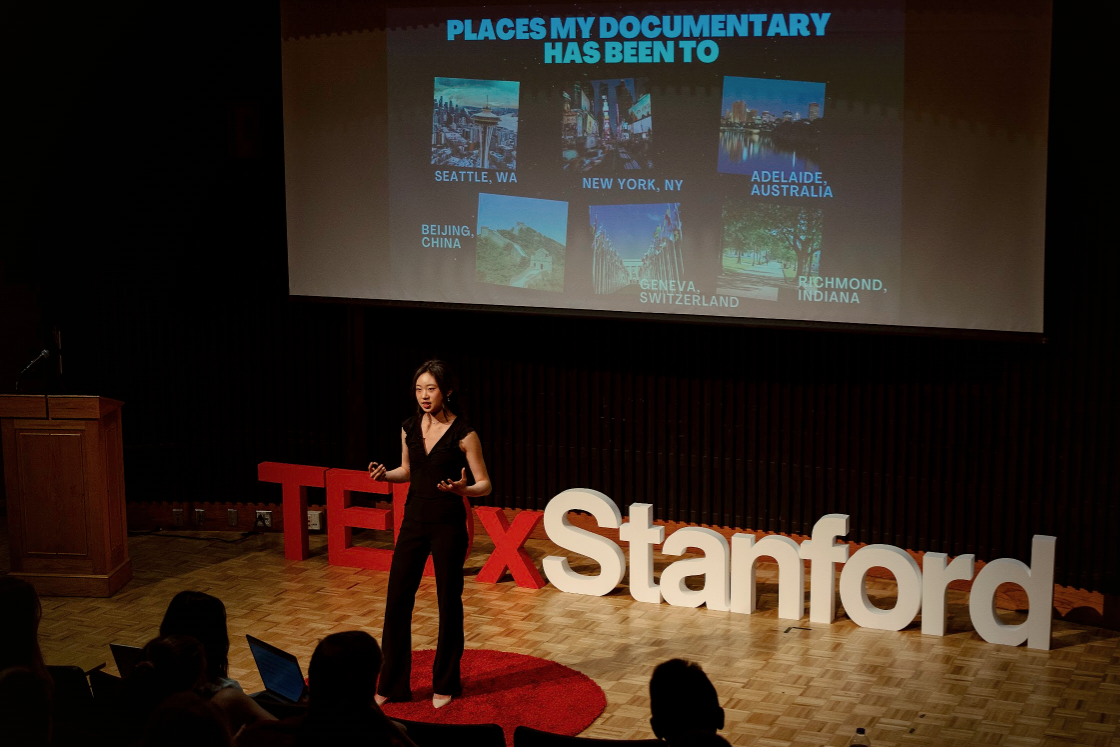
A TEDxStanford 2024 speaker and documentary filmmaker, she is passionate about applying rigorous economic and logistical solutions to one of the deadliest problems in global health: the failure of medical supply systems to deliver life-saving drugs on time.
I build financial and operational infrastructure for institutions operating under systemic constraints.
My work focuses on designing and implementing procurement, financing, and payment systems that replace fragmented, reactive workflows with predictable, accountable mechanisms—particularly in healthcare settings across emerging markets. Through Niora Systems, I am working directly with hospitals to deploy subscription-based procurement and risk-management tools that stabilise medicine access, strengthen supplier relationships, and reduce volatility in essential supply chains.
This work is execution-first: grounded in real hospital environments, shaped by operational constraints, and built to scale into durable institutional infrastructure rather than short-term interventions.
My research sits at the intersection of health systems, economics, and biological risk. I study how institutional incentives, market design, and financing structures shape outcomes in healthcare—particularly in contexts where failures in procurement and governance translate directly into preventable morbidity and mortality.
With a background in computational biology and economics at Stanford, my work spans antimicrobial resistance, essential medicine access, and the downstream effects of weak contract enforcement and payment uncertainty. I approach them as system design problems—where incentives, information asymmetries, and capital structure determine real-world health outcomes.
This research directly informs my applied work, ensuring that theory and practice reinforce one another.
Alongside building and research, I engage in public writing and speaking focused on how systems shape health, access, and power. My work aims to shift conversations away from surface-level fixes toward structural design—particularly in global health, development policy, and emerging-market investment.
I have spoken publicly on topics including antimicrobial resistance, health system design, and institutional failure, including a TEDxStanford talk, and regularly write to translate complex system dynamics into accessible narratives for broader audiences. I see narrative not as advocacy, but as a tool for aligning incentives, capital, and attention toward long-term solutions.